Mastering Self-Discipline: 5 Proven Techniques for Lasting Growth in 2026

Mastering self-discipline is essential for achieving lasting personal growth, enabling individuals to consistently pursue their goals and build a more purposeful life.
Are you ready to unlock your full potential and achieve significant personal growth in 2026? The journey to lasting self-improvement often hinges on one critical factor: mastering self-discipline techniques. This article will guide you through five proven strategies to cultivate the unwavering focus and determination needed to transform your aspirations into reality, paving the way for a more fulfilling and successful life.
Understanding the Foundation of Self-Discipline
Before diving into specific techniques, it’s vital to grasp what self-discipline truly entails. It’s not about rigid self-deprivation or an innate trait only a few possess; rather, it’s a skill developed through consistent effort and intentional practice. Self-discipline is the ability to control one’s impulses, emotions, and desires to stay focused on long-term goals, even when faced with immediate gratification or discomfort. It’s the internal force that propels you forward when motivation wanes, ensuring you remain committed to your chosen path.
Many people mistakenly believe that self-discipline is solely about willpower, a finite resource that can be depleted. While willpower plays a role, a more sustainable approach involves creating systems and environments that support your goals, making the disciplined choice the easier one. This foundational understanding shifts the perspective from a battle against oneself to a strategic alignment of actions with values and objectives. By comprehending its true nature, we can approach its cultivation with more effective and less frustrating methods.
The Role of Mindset in Self-Discipline
Your mindset profoundly influences your capacity for self-discipline. A growth mindset, where challenges are seen as opportunities for learning and improvement, is far more conducive to developing discipline than a fixed mindset, which views abilities as static. Believing in your capacity to change and grow is the first step toward embracing the daily efforts required for self-mastery.
- Embrace Challenges: View obstacles not as roadblocks but as chances to strengthen your resolve.
- Learn from Setbacks: Don’t let failures define you; instead, extract lessons and adjust your approach.
- Cultivate Belief: Trust in your ability to develop new habits and achieve difficult goals over time.
Ultimately, self-discipline is a dynamic process of learning, adapting, and continuously striving for improvement. It’s about building a robust internal framework that supports your aspirations, allowing you to make conscious choices that align with your deepest values and long-term vision. This strong foundation is what enables the consistent application of practical techniques we will explore.
Technique 1: Setting Clear and Achievable Goals
The first and arguably most crucial step in mastering self-discipline is to define your goals with absolute clarity. Vague aspirations like ‘I want to be healthier’ or ‘I want to be more productive’ lack the specific direction needed to guide disciplined action. Instead, your goals must be SMART: Specific, Measurable, Achievable, Relevant, and Time-bound. This framework provides a concrete target and a roadmap for how to get there, making the path of discipline much clearer.
When you have a crystal-clear vision of what you want to achieve, and more importantly, why you want to achieve it, your internal drive becomes significantly stronger. This clarity helps you identify the specific actions required and allows you to track your progress, which in itself is a powerful motivator. Without well-defined goals, efforts can feel scattered and aimless, leading to a quick loss of momentum and a decline in self-discipline.
Breaking Down Large Goals
Large, ambitious goals can often feel overwhelming, leading to procrastination and a lack of sustained effort. The solution lies in breaking these monumental tasks into smaller, manageable steps. Each small step should be a mini-goal that contributes to the larger objective, making the overall journey less intimidating and more achievable.
- Identify Milestones: Pinpoint significant checkpoints along the path to your main goal.
- Create Daily/Weekly Tasks: Translate milestones into actionable tasks that can be completed regularly.
- Celebrate Small Wins: Acknowledge and reward yourself for completing each smaller step to maintain motivation.
By focusing on one small, actionable step at a time, you build momentum and reinforce your belief in your ability to achieve the larger goal. This incremental approach makes the practice of self-discipline less daunting and more sustainable, fostering a sense of accomplishment with each completed task. The power of small, consistent actions cannot be overstated in the journey toward self-mastery and lasting personal growth.
Technique 2: Cultivating Powerful Habits
Self-discipline isn’t just about forcing yourself to do things; it’s profoundly about automating positive behaviors through habit formation. Habits are actions we perform automatically, often without conscious thought, freeing up mental energy and reducing the need for constant willpower. By intentionally cultivating powerful habits that align with your goals, you embed discipline into your daily routine, making it a natural part of who you are.
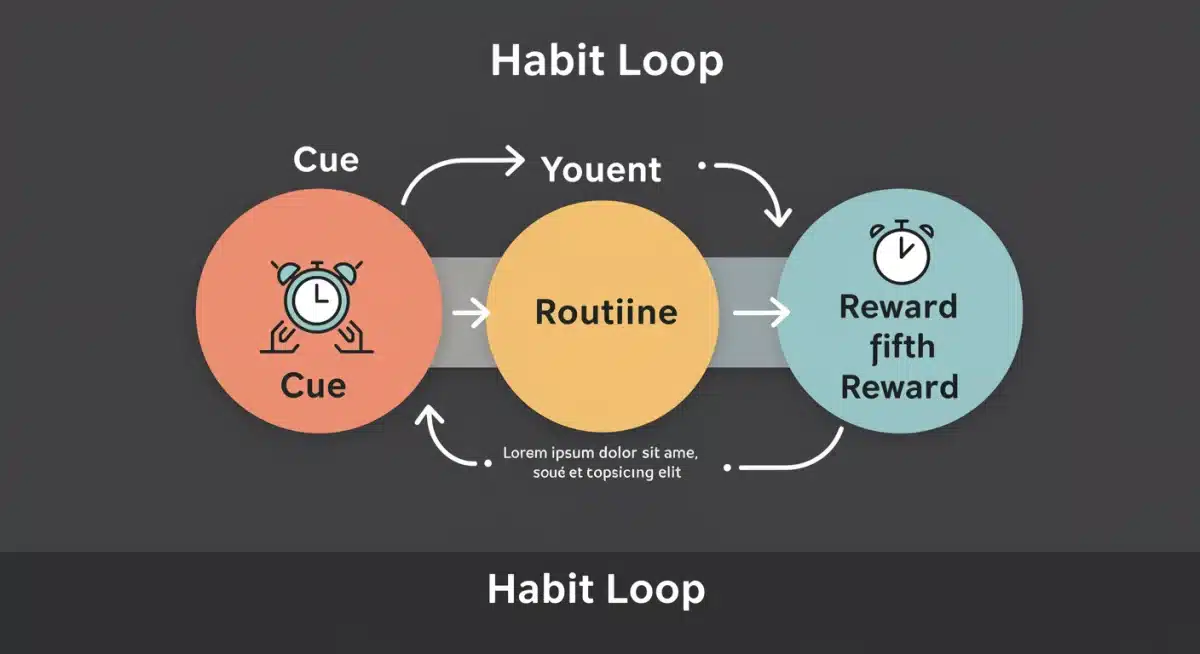
The key to effective habit formation lies in understanding the habit loop: cue, routine, and reward. A cue triggers the behavior, the routine is the behavior itself, and the reward reinforces the loop, making you want to repeat the routine. By consciously designing these loops, you can replace undesirable habits with beneficial ones, systematically enhancing your self-discipline and progress toward your objectives. This strategic approach minimizes the internal struggle often associated with disciplined behavior.
Strategies for Habit Stacking and Environmental Design
Two powerful strategies for cultivating habits are habit stacking and environmental design. Habit stacking involves attaching a new habit to an existing one, leveraging the established routine to integrate new behaviors seamlessly. For example, if you already brush your teeth every morning, you might stack a new habit of meditating for five minutes immediately after.
- Habit Stacking: Identify an existing habit and link a new desired behavior to it.
- Environmental Design: Modify your surroundings to make desired behaviors easier and undesired behaviors harder.
- Accountability Partners: Share your habit goals with someone who can support and check in on your progress.
Environmental design involves structuring your physical and digital spaces to support your desired habits. If you want to eat healthier, keep healthy snacks visible and unhealthy ones out of sight. If you want to exercise more, lay out your workout clothes the night before. These subtle changes in your environment can significantly reduce the friction associated with disciplined actions, making it easier to stick to your commitments. By strategically designing your habits and environment, you create a powerful system for sustained self-discipline.
Technique 3: Practicing Mindfulness and Self-Awareness
Mindfulness and self-awareness are foundational pillars for mastering self-discipline. To effectively control impulses and make conscious choices, you must first be aware of your thoughts, emotions, and bodily sensations. Mindfulness is the practice of being present and observing these internal states without judgment. This practice allows you to create a crucial pause between stimulus and response, giving you the opportunity to choose a disciplined action rather than reacting impulsively.
Without self-awareness, our actions are often driven by unconscious patterns or immediate desires. By cultivating mindfulness, you gain insight into why you might be procrastinating, overeating, or avoiding a task. This understanding is the first step toward changing those behaviors. It’s not about criticizing yourself, but rather observing with curiosity, which empowers you to identify triggers and develop more effective coping mechanisms or alternative responses.
Meditation and Journaling for Enhanced Awareness
Two effective tools for enhancing mindfulness and self-awareness are meditation and journaling. Regular meditation practice trains your mind to focus and observe, strengthening your ability to notice thoughts and feelings without getting swept away by them. Even a few minutes of meditation daily can significantly improve your self-regulation.
- Daily Meditation: Start with short sessions (5-10 minutes) to build focus and presence.
- Mindful Pauses: Throughout your day, take brief moments to check in with your breath and body.
- Journaling: Regularly write down your thoughts, feelings, and behavioral patterns to gain deeper insights.
Journaling provides a space for reflection, allowing you to process experiences, identify recurring patterns, and clarify your values and motivations. By putting your thoughts on paper, you gain an objective perspective that can reveal hidden drivers behind your actions. Both meditation and journaling are invaluable for building the internal strength and clarity necessary for sustained self-discipline, helping you to align your actions with your intentions.
Technique 4: Implementing the Power of Delayed Gratification
Delayed gratification is a cornerstone of self-discipline. It’s the ability to resist the temptation of an immediate reward in favor of a later, more substantial benefit. In a world saturated with instant solutions and quick fixes, developing this skill is more critical than ever for achieving long-term personal growth. Whether it’s saving money instead of spending it, exercising when you’d rather relax, or working on a challenging project instead of browsing social media, delayed gratification is about prioritizing your future self.
The challenge with delayed gratification often lies in the perceived distance between the present action and the future reward. Our brains are wired for immediate pleasure, making it difficult to choose discomfort now for a benefit later. However, by consciously practicing this skill, you strengthen your prefrontal cortex, the part of the brain responsible for executive functions like planning and decision-making, thereby enhancing your overall capacity for self-control.
Strategies for Strengthening Delayed Gratification
To strengthen your ability to delay gratification, several strategies can be employed. One effective method is to visualize your future self enjoying the rewards of your current disciplined actions. Creating a vivid mental picture of your success can make the future benefit feel more immediate and motivating.
- Visualize Future Rewards: Clearly imagine the benefits of your disciplined actions.
- Set Up Rewards Systems: Create small, healthy rewards for consistent disciplined behavior.
- Avoid Triggers: Identify and minimize exposure to situations or items that tempt immediate gratification.
Another strategy involves setting up small, healthy reward systems for yourself. While the ultimate goal is delayed gratification, small, intermittent rewards for consistent disciplined behavior can help bridge the gap and keep you motivated. For instance, after a week of consistent exercise, you might allow yourself a relaxing bath or an hour with a favorite hobby. By consciously practicing delayed gratification and reinforcing it with strategic rewards, you build a powerful muscle for enduring discipline and sustained success in all areas of your life.
Technique 5: Building Resilience and Embracing Setbacks
No journey of personal growth or self-discipline is without its challenges and setbacks. The fifth proven technique for mastering self-discipline is not about avoiding failure, but about building resilience and learning to embrace these moments as opportunities for growth. Resilience is the ability to bounce back from adversity, to persist in the face of difficulties, and to adapt to change. Without it, even the most disciplined individual can be derailed by unexpected obstacles or moments of weakness.
It’s important to understand that lapses in discipline are normal and inevitable. The difference between those who succeed and those who give up often lies in how they respond to these setbacks. Instead of viewing a lapse as a complete failure that negates all previous progress, see it as a data point, an opportunity to learn what went wrong and adjust your strategy. This reframing is crucial for maintaining momentum and preventing a single slip from turning into a complete abandonment of your goals.
Developing a Growth Mindset and Self-Compassion
Cultivating a growth mindset, as discussed earlier, is vital here. When you believe that your abilities and discipline can be developed through effort, setbacks become temporary obstacles rather than permanent limitations. Alongside this, practicing self-compassion is equally important. Be kind to yourself when you falter; harsh self-criticism can be demotivating and counterproductive.
- Reflect, Don’t Ruminate: Analyze what happened without dwelling on feelings of guilt.
- Adjust and Recommit: Learn from the experience and immediately plan your next steps.
- Practice Self-Forgiveness: Acknowledge your humanity and move forward without excessive self-blame.
Self-compassion means treating yourself with the same understanding and encouragement you would offer a good friend. It allows you to acknowledge your imperfections and challenges without judgment, fostering a more resilient and sustainable approach to self-discipline. By building resilience and embracing setbacks with a learning attitude, you fortify your resolve and ensure that your journey of personal growth remains robust and continuously forward-moving, even in the face of inevitable difficulties.
| Key Technique | Brief Description |
|---|---|
| Set Clear Goals | Define SMART goals to provide clear direction and motivation for disciplined actions. |
| Cultivate Habits | Automate positive behaviors through habit loops (cue, routine, reward) and environmental design. |
| Practice Mindfulness | Increase self-awareness to make conscious choices, not impulsive reactions, through meditation and journaling. |
| Delay Gratification | Resist immediate pleasures for greater long-term rewards, strengthening willpower and focus. |
Frequently Asked Questions About Self-Discipline
The most important aspect of self-discipline is consistency. It’s not about being perfect all the time, but about showing up and making disciplined choices repeatedly, even when it’s difficult. This consistent effort builds momentum and strengthens your capacity for self-control over time, leading to lasting personal growth.
Mastering self-discipline is an ongoing journey, not a destination. While you can start seeing improvements in a few weeks with consistent practice, true mastery involves continuous effort and adaptation throughout your life. It’s about developing a lifestyle of conscious choices and resilience, which evolves as you do.
Self-discipline is absolutely a learned skill. While some individuals may have a natural predisposition, anyone can develop and strengthen their self-discipline through consistent practice, strategic techniques, and a growth-oriented mindset. It’s like a muscle that gets stronger with regular exercise and intentional effort.
Failure is a natural part of the learning process. Instead of viewing it as an end, see it as an opportunity to analyze what went wrong, adjust your strategy, and try again. Practice self-compassion, learn from your setbacks, and recommit to your goals. Resilience is key to overcoming these moments.
Self-discipline is the engine of personal growth. It enables you to consistently take the actions necessary to achieve your goals, overcome challenges, and develop new skills. By cultivating discipline, you build resilience, improve decision-making, and create a life aligned with your values, leading to profound and lasting self-improvement.
Conclusion
Mastering self-discipline is not a mythical quest reserved for a select few; it is a tangible skill that anyone can cultivate through consistent effort and the application of proven techniques. By setting clear, achievable goals, cultivating powerful habits, practicing mindfulness and self-awareness, implementing delayed gratification, and building resilience to embrace setbacks, you equip yourself with the essential tools for profound and lasting personal growth. As we move through 2026 and beyond, the commitment to these practices will undoubtedly pave the way for a more focused, productive, and ultimately fulfilling life, transforming your aspirations into tangible realities.